Choosing guitar speaker cabinets
Guitar speaker cabinets are the enclosures that hold the speakers at the end of a guitar signal chain. This category covers extension cabinets that pair with an amplifier head or combo, along with full-range flat-response cabinets built to receive the output of an amp modeler. The players who use this gear include guitarists who run an amplifier head through a separate cabinet and players who route a modeling unit or preamp into a cabinet of their own.
The range divides first by speaker layout. Single-speaker models use one driver from 3 inches to 12 inches, two-speaker models are 2x12 layouts, and four-speaker models are 4x12 layouts. Power handling forms the second division, from 3 W on a cabinet made for a small amplifier to 2500 W on a full-range cabinet for modeling rigs. Many extension cabinets are rated between 60 W and 240 W, and the Headrush cabinets for modeling rigs run from 750 W to 2500 W.
Enclosure design and intended use form the third division. Closed-back cabinets direct sound from the front of the speakers, while open-back cabinets have no rear panel and let sound leave from the back as well. Some extension cabinets are designed around a specific amplifier, such as the Fender enclosure made for Hot Rod Deluxe combos and the Blackstar cabinet made for the Fly 3. Full-range flat-response cabinets are designed for amp modeling output, so the tonal shaping comes from the modeler rather than the cabinet.
What to look for
- Power
The wattage figure is the power level the cabinet is rated to handle. Ratings in this category run from 3 W to 2500 W, and the rating should be compared with the output of the amplifier that will drive the cabinet. Power handling is a limit on the amplifier output the cabinet can take, not a measure of loudness.
- Connectivity
Input types vary by model, from a standard 1/4-inch input to XLR and TRS connections, and some full-range cabinets add auxiliary, USB or Bluetooth inputs. The connection type determines which cable or adapter a rig needs. Bluetooth and USB inputs are used for playback and recording, so they matter for players who work with a phone or computer.
- Speaker configuration
The count and size of the speakers set the cabinet layout, such as 1x12, 2x12 or 4x12. A 1x12 cabinet has one 12-inch speaker, a 2x12 has two, and a 4x12 has four. More speakers generally add volume and low-end output, so the layout is usually chosen to match the amplifier and the playing situation.
- Back design
Open-back cabinets release sound from the rear of the speakers as well as the front, which spreads the sound more widely. Closed-back cabinets direct output forward. The category includes both designs, and the choice changes how the sound travels into the room.
- Impedance
The ohm rating is the electrical load the cabinet presents to the amplifier. Ratings in this category include 8 ohms and 16 ohms. The amplifier documentation lists the loads it supports, and the cabinet rating should match one of them.
- Full-range flat-response design
Full-range flat-response cabinets are designed to reproduce the signal from an amp modeler or preamp with a flat response, so the tonal character comes from the upstream unit. These cabinets are made for modeling rigs, and several in this category include Bluetooth.
Top guitar speaker cabinets in the reference
A reference list of well-documented models, not a ranking.




Notable models
- Headrush FRFR112 MKII 2500W for Modellers. A 12-inch full-range flat-response cabinet with Bluetooth, rated at 2500 W for amp modeling rigs.
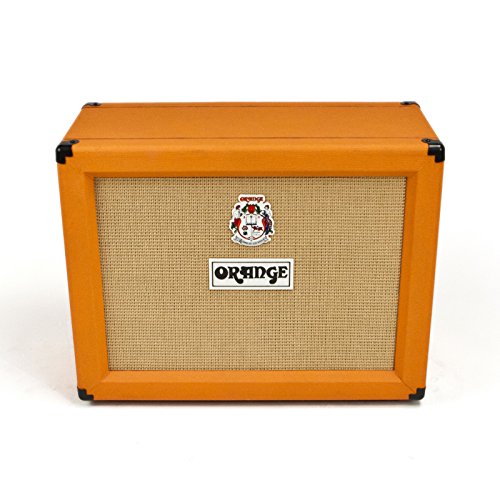
- Orange PPC212-OB 120-Watt 2x12 Inches Open-Back Cabinet. An open-back 2x12 cabinet with two Celestion Vintage 30 speakers and a 16-ohm rating.
- Orange PPC108 20W 1x8" Speaker Cabinet. A closed-back 1x8 cabinet built around an 8-inch Voice of the World driver, rated at 20 W at 8 ohms.
- Blackstar Fly 103-3W 1x3 Closed-Back Cabinet for Fly 3. A 3 W closed-back 1x3 cabinet made for the Fly 3 amplifier.
Frequently asked questions
What does the wattage rating on a speaker cabinet indicate?
The rating is the power level the cabinet is specified to handle. Ratings across this category run from 3 W on a 1x3 cabinet made for the Fly 3 amplifier to 2500 W on a full-range 12-inch cabinet for modeling rigs.
Which cabinets in this category are made for modeling rigs?
The Headrush FRFR108 MKII 2000W for Modellers, the Headrush FRFR112 MKII 2500W for Modellers and the Headrush FRFR-12 CAB 750W Full-Range Flat-Response 12" Cabinet are full-range flat-response models made for amp modeling rigs. The Headrush FRFR-12 CAB has an XLR/TRS input and Bluetooth 5.3.
What does an open-back cabinet change compared with a closed-back cabinet?
An open-back cabinet has no rear panel, so sound leaves the back of the speakers as well as the front. A closed-back cabinet directs output forward. The Orange PPC212-OB 120-Watt 2x12 Inches Open-Back Cabinet is open-back, and the Orange PPC108 20W 1x8" Speaker Cabinet is closed-back.
Which cabinets in this category are designed for a specific amplifier?
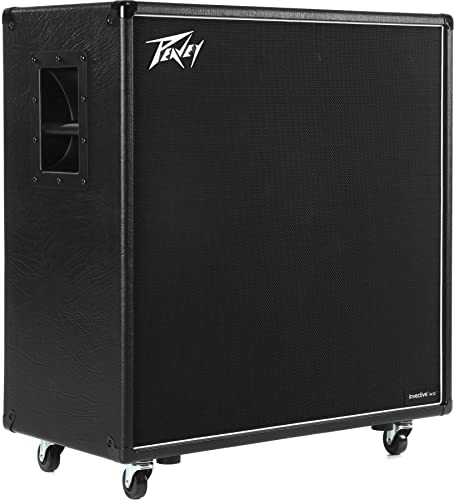
The Fender Hot Rod Deluxe 112 Enclosure is designed to sit beneath Hot Rod Deluxe combos, and the Blackstar Fly 103-3W 1x3 Closed-Back Cabinet for Fly 3 is made for the Fly 3 amplifier. The Peavey Invective 412-240-Watt 4x12 Inches Extension Cabinet is an extension cabinet built to pair with an amplifier head.
How many speakers are in a 4x12 cabinet?
A 4x12 cabinet holds four 12-inch speakers. The EVH 5150 Iconic Series 160-watt 4 x 12-inch Cabinet and the Friedman 412 170-Watt 4x12 Inches Extension Cabinet both use that layout.
Sources: manufacturer specifications and GuitarTrader catalog data. Last verified October 24, 2026.