Choosing bass amps
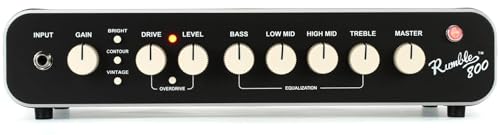
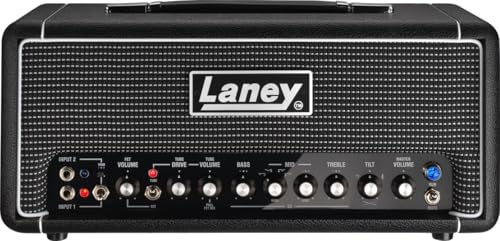
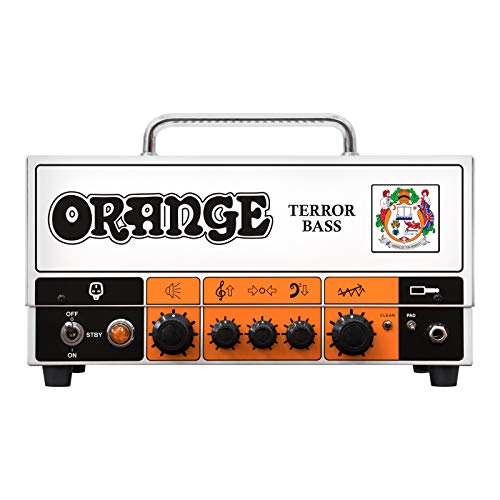
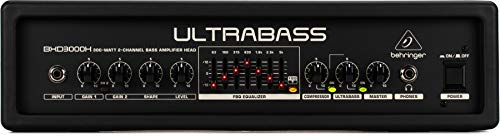
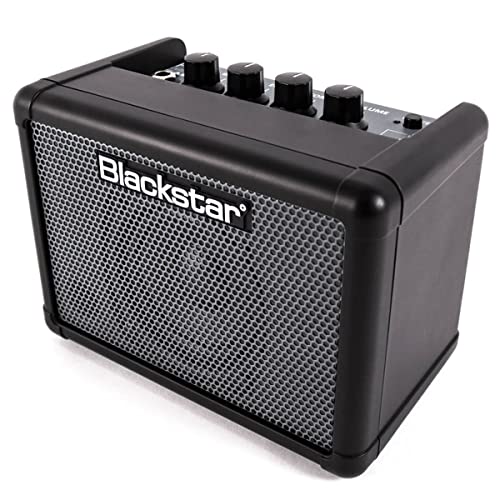
Bass Amps covers the amplification a bass player uses on stage, in the studio and for practice, along with a small group of guitar-compatible heads and combos for players who share one amplifier between instruments. The bass range divides into four groups. Bass Combo Amps place the amplifier and speaker in one enclosure, from 3-watt battery units to 800-watt two-speaker models. Bass Amp Heads are the amplifier alone, meant to drive a separate cabinet, and they run from compact desktop units to high-wattage portable heads. Bass Speaker Cabinets are the enclosures a head drives, including two-speaker models with 10-inch drivers. Practice & Headphone Amps (Bass) are small units for quiet rehearsal, with some models offering headphone sockets and battery operation for portable use.
The guitar-side subcategories, Guitar Amp Heads, Guitar Combo Amps and Practice & Headphone Amps (Guitar), hold a few tube, solid-state, hybrid and digital designs for players who want one amplifier to cover both instruments. They use the same specification labels as the bass models, so a shared rig can be compared on power, technology and connections.
Power rating is the first point of comparison. Practice units sit at the low end, from about 3 watts to 25 watts, while the higher-output heads and combos reach 500 to 1,000 watts. Amplifier design adds a second dimension, with tube, solid-state, hybrid, Class-D and digital circuits all represented, and the format decides whether a player also needs a separate cabinet. Speaker configuration, connections and tone controls then narrow the choice for a particular rig.
What to look for
- Power
Power is rated in watts and defines the output level the amplifier is designed to deliver. Practice units in the 3 to 25 watt range suit rehearsal rooms and headphone use, while models rated 200 watts and above are sized for larger venues. Read the rating together with the speaker configuration, since the cabinet determines how that output is projected.
- Technology
Technology identifies the circuit design, such as tube, solid-state, hybrid, Class-D or digital. Tube designs respond differently when driven hard, and solid-state and Class-D designs are generally lighter for their output. Digital units use modeled amp and effect circuits instead of a conventional preamp, so the label is the quickest way to confirm the design.
- Amp type
Amp type separates a combo, which houses the amplifier and speaker together, from a head, which is the amplifier alone, and from a cabinet, which holds the speakers. A head needs a cabinet to make sound and a cabinet needs a head, while a combo works on its own. Confirm the type before comparing wattage, because a head and a combo with the same rating describe different parts of a rig.
- Connectivity
Connectivity covers the input, output and interface jacks. XLR line outputs let a bass amp feed a mixing console or recording interface directly, and some models add rear-panel MIDI or footswitch jacks. Quarter-inch inputs and headphone sockets handle instrument and practice use. Check the rear panel for the output types before planning a setup.
- Speaker configuration
Speaker configuration sets the driver count and size, such as a single 8-inch speaker, a 1x12, a 2x10 or a 1x15. A single small driver keeps a combo compact and low in output, while two 10-inch drivers or a 15-inch driver change the tonal balance and the size of the cabinet. The configuration should match the power rating and the intended room.
Top bass amps in the reference
A reference list of well-documented models, not a ranking.




Notable models
- Tech 21 PBDR SansAmp Programmable Driver DI. It is a three-channel programmable bass preamp that also works as a stompbox and DI, with built-in SansAmp tube amp emulation.
- Fender Rumble Stage 800. It is a digital two-speaker bass combo with Bluetooth, Wi-Fi, a 60-second looper and two XLR line outputs.
- Ampeg SVT-210AV 2x10 Cabinet. It is a sealed 2x10 cabinet rated 200 watts at 8 ohms and designed to pair with the Ampeg MICRO VR Head.
- Peavey MiniMAX 600-Watt Mini Head. It is a 600-watt head with psycho-acoustic low end enhancement and a TransTube pre-gain boost.
- Fender 57 Custom Twin. It is a 40-watt hand-wired tube combo with two channels and two 12-inch alnico speakers, and it sits in the guitar-side group.
Frequently asked questions
Which specifications should a player compare when choosing one amplifier for both bass and guitar?
Power rating, speaker configuration and tone controls are the first points to compare. The guitar-side models in this category use the same labels for technology and connections, which makes a side-by-side check straightforward.
What does the power rating on a bass amp indicate?
The rating is given in watts and defines the output level the amplifier is designed to deliver. Practice units in this category run from about 3 to 25 watts, and the highest-output models in this category reach 1,000 watts.
How does a combo differ from a head with a separate cabinet?
A combo places the amplifier and speaker in one enclosure, while a head is the amplifier alone and requires a speaker cabinet. The format choice usually depends on how many speakers a player wants to run and how the rig will be transported.
Which connections should a player look for on a bass amplifier?
XLR line outputs let a bass amp feed a mixing console or recording interface directly. Quarter-inch inputs and headphone sockets handle instrument and practice use, and some models add rear-panel MIDI.
How does a player decide between tube and solid-state designs?
Tube designs respond differently when driven hard, while solid-state and Class-D designs are generally lighter for their output. The technology label on each product gives the circuit type, so the choice can be checked model by model.
Sources: manufacturer specifications and GuitarTrader catalog data. Last verified October 24, 2026.