Choosing multi-effects & modelers
Multi-effects units and amp modelers put several effects, and often an amplifier model, into a single chassis. A multi-effects unit typically bundles overdrive, modulation, delay and reverb with preset storage, and it is commonly placed in front of an amplifier or in its effects loop. Amp modelers reproduce amplifier and cabinet tones digitally, so the signal can feed a PA, an audio interface or a powered monitor directly. Many units in this category combine both roles.
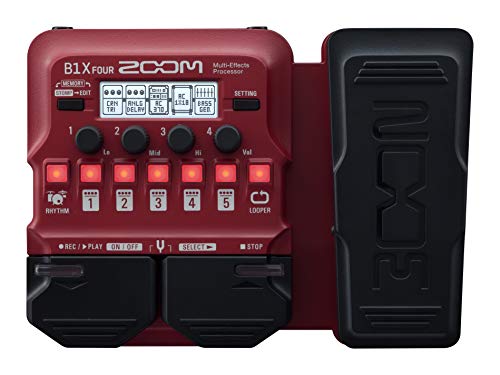
The range divides by format, power source and purpose. Corded floor units such as the Boss GT-1000 Effects Processor and the Zoom G5 Floor Multi hold many effect blocks and amp models in one chassis. Compact and pocket designs, including the Valeton GP-5 Compact Multi-Effects Processor and the Sonicake QME-10 Pocket Master, reduce the footprint, and battery-powered units such as the Zoom G1X Four Multi-Effects Processor suit portable use. Bass units, including the Zoom B1X Four Multi-Effects, and single-family pedals such as the Boss MD-200 Quality Modulation complete the range.
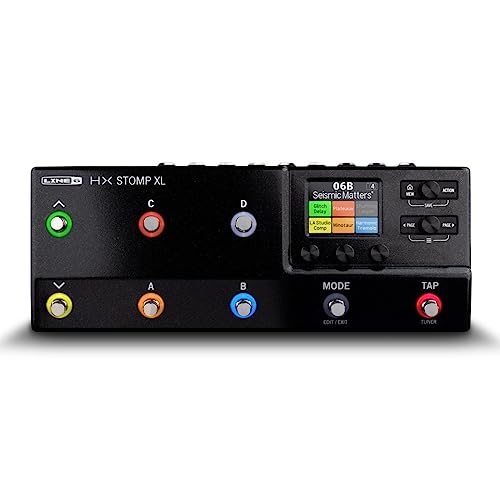
Connectivity and control differ across models. USB connections appear on many units for direct recording, MIDI control appears on some, and effects loops allow a unit to run through an amplifier loop. Expression pedals and expression inputs, such as the input on the Line 6 HX Effects Processor, change parameters during play. Preset counts and footswitch layouts vary, and they determine how quickly a player moves between sounds.
What to look for
- Effect type
Effect type shows which families of effects a unit carries. Units labeled multi-effects bundle delay, reverb, overdrive, modulation and more, and amp-modeler units also reproduce amplifier and cabinet tones. Single-family pedals, such as the Boss MD-200 Quality Modulation, cover one group of effects.
- Connectivity
Connectivity sets how the unit links to a recorder, a controller or an amplifier. USB audio allows direct recording, and the Zoom G5n Multi-Effects Processor includes a USB audio interface. Effects loops send the signal to an amplifier and return it, and MIDI links the unit to other gear for preset changes.
- Power requirement
Power requirement determines where a unit can run. Battery-powered units, such as the Zoom G1X Four Multi-Effects Processor, operate away from an outlet, while corded units and 9V DC designs need a supply. Check the connector and the current draw in the model specification before setting up the unit.
- Expression control
An expression pedal or input lets the player change a parameter, such as volume or a wah sweep, with the foot. The Zoom G1X Four Multi-Effects Processor includes an expression pedal, and the Line 6 HX Effects Processor has an expression input.
- Amp and cabinet models
Amp models reproduce amplifier circuits digitally, and cabinet models or impulse responses reproduce how a speaker and microphone sound. An impulse response is a captured sample of a cabinet, and loading one changes the cabinet voicing. The Boss GX-100 Advanced Effects Processor offers 32 amp types, and the Valeton GP-100 Modeling IR Cabinets Simulation Multi Language Multi-Effects includes 40 factory cabinet IRs.
- Presets and footswitches
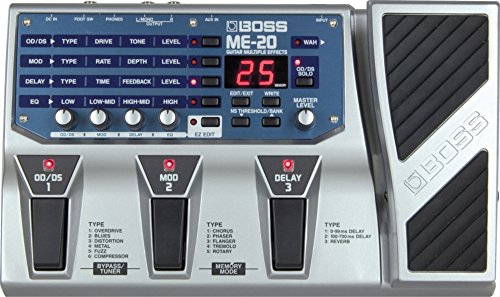
Preset storage determines how many complete sounds a unit holds, and footswitch layout determines how quickly a player moves between them. The Boss Multi Effects Switcher provides 200 patch locations, the Boss MD-200 Quality Modulation stores 128 user setups, and the Wampler Terraform Multi-Modulation includes eight presets.
Top multi-effects & modelers in the reference
A reference list of well-documented models, not a ranking.




Notable models
- Boss GT-1000 Effects Processor. A corded amp and effects processor with 185 effect types, AIRD amp processing and built-in Bluetooth editing.
- Strymon Iridium & IR Cab. An amp modeler and cabinet IR convolver in one unit, with MONO, STEREO and SUM input modes.
- Tech 21 Fly Rig 5 V2 Multi. A corded unit built on an all-analog SansAmp section, with Plexi and Cali distortion, delay, reverb and a tuner.
- Mooer GE100Pro Li Multi- AI Assistant Battery Power. A battery-powered AI unit with a 3.5-inch color display and support for NAM and MNRS amp profiles.
Frequently asked questions
What separates a multi-effects unit from an amp modeler?
A multi-effects unit bundles effects such as delay, reverb and overdrive with preset storage. An amp modeler reproduces amplifier and cabinet tones digitally. Many units combine both roles, such as the Boss GX-100 Advanced Effects Processor, which offers 32 amp types and more than 170 effects.
Can a multi-effects unit be placed in an amplifier loop?
Units with a send and return loop can sit in an amplifier loop, and the Boss ME-90 Multi-Effects Processor includes one send and return loop. Units without a loop run in front of the amplifier input.
Which units include a USB audio interface?
The Zoom G5n Multi-Effects Processor and the Sonicake QME-10 Pocket Master both include a USB audio interface, which allows direct recording to a computer.
What does an impulse response do in a modeler?
An impulse response is a captured sample of a cabinet and microphone, and loading one reproduces that speaker sound. The Strymon Iridium & IR Cab works as a cabinet IR convolver, and the Valeton GP-100 Modeling IR Cabinets Simulation Multi Language Multi-Effects includes 40 factory cabinet IRs.
Which units run on battery power?
The Zoom G1X Four Multi-Effects Processor, the Zoom B1X Four Multi-Effects and the Mooer GE100Pro Li Multi- AI Assistant Battery Power are battery powered.
Sources: manufacturer specifications and GuitarTrader catalog data. Last verified October 24, 2026.