
Fishman Platinum Pro EQ/DI Analog Preamp
Analog preamp pedal with a five-band EQ, sweepable feedback notch, balanced XLR D.I. output and built-in tuner
Price and availability as of Nov 24, 2026, 1:58 AM PST, subject to change. As an Amazon Associate, GuitarTrader earns from qualifying purchases made through this link, at no additional cost to you.
Notice a mistake? Let us know
Overview
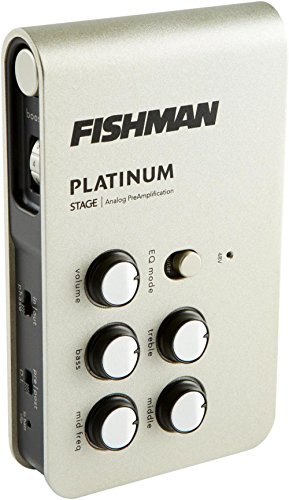
The Platinum Pro EQ/DI is an analog preamp pedal from Fishman for acoustic guitar. It has a five-band EQ with a sweepable mid and an adjustable low-cut filter, and a feedback control built from a sweepable notch filter and a phase invert switch. The preamp is a 17-volt discrete Class A design. A balanced XLR D.I. output carries the signal to a mixer or recording input, and a pre/post EQ switch sets whether the EQ applies to that output. The pedal also has an effects loop for external acoustic effects pedals such as reverb, chorus and delay, and a built-in tuner that mutes the output when engaged.
Key features
- A five-band EQ with a sweepable mid and an adjustable low-cut filter.
- A feedback control built from a sweepable notch filter and a phase invert switch.
- An effects loop for connecting external acoustic effects pedals such as reverb, chorus and delay.
- A balanced XLR D.I. output, with a pre/post EQ switch that sets whether the EQ applies to it.
- A built-in tuner that mutes the output when engaged.
- A 17-volt discrete Class A preamp.
Specifications · verified against the manufacturer
- Color / finish
- Beige
Product identifiers
- Brand
- Fishman
- Model
- Platinum Pro EQ/DI Analog Preamp
- Manufacturer model number
- PRO-PLT-201
- UPC (GTIN-12)
- 605609152466
- ASIN (Amazon)
- B00KVWK6M4
- Category
- Multi-Effects & Modelers
- Manufacturer page
- fishman.com
Fishman Platinum Pro EQ/DI Analog Preamp — where it fits
The pedal is a preamp, EQ and D.I. for acoustic guitar, used with a PA or a recording input.
Acoustic set through a PA
The EQ's five bands, with a sweepable mid and a low-cut filter, shape an acoustic guitar before the signal reaches a PA. The balanced XLR D.I. output sends that signal to the PA desk directly.
Controlling feedback on stage
The sweepable notch filter targets the frequency where feedback builds. The phase invert switch changes the polarity of the signal, which can change how feedback reacts.
Adding reverb, chorus or delay
The effects loop takes external acoustic effects pedals such as reverb, chorus and delay. A player with those pedals can add them to the signal through the loop.
Recording direct from the pedal
The balanced XLR output feeds a recording input without a separate D.I. box. The pre/post switch decides whether the EQ is part of that feed.
Tuning between songs
The built-in tuner mutes the output while it is engaged, so tuning between songs keeps the sound silent for the audience. The tuner is disengaged once tuning is complete.
Worth knowing
- Engaging the tuner mutes the output. Tuning is silent to the audience, so the tuner is switched off before the player plays.
- The pre/post EQ switch sets whether the EQ settings apply to the XLR output. The XLR output carries the EQ in one switch position and not in the other, so the switch changes the sound sent to a mixer or recording input.
- The feedback control is one sweepable notch filter. One notch works on one band at a time, so feedback at several frequencies needs repeated sweeping.
- Manufacturer product page: fishman.com (accessed November 1, 2026)
- GuitarTrader catalog data
Setup and compatibility
The effects loop connects external acoustic effects pedals, and the balanced XLR D.I. output carries the signal to a mixer or recording input.
Frequently asked questions
Does the pedal have a built-in tuner?
Yes. The tuner is built in, and engaging it mutes the output.
Is a power adapter included with the pedal?
No.
Does the pedal have a balanced output?
Yes. A balanced XLR D.I. output is on the pedal.
Does the pre/post EQ switch determine whether EQ applies to the XLR output?
Yes. The pre/post EQ switch determines whether the EQ settings apply to the XLR output.
More from Fishman
All Fishman gear →


Similar multi-effects & modelers
All multi-effects & modelers →


