JHS 3 Series Octave Reverb
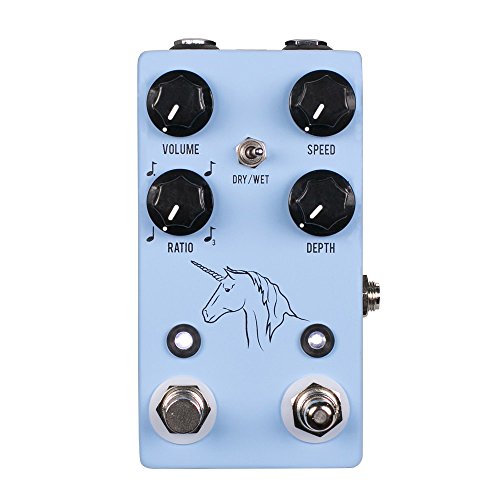
Octave reverb pedal that adds upper or lower octave layers to its reverb, selected by one toggle switch.
Price and availability as of Nov 24, 2026, 2:07 AM PST, subject to change. As an Amazon Associate, GuitarTrader earns from qualifying purchases made through this link, at no additional cost to you.
Notice a mistake? Let us know
Overview
The JHS 3 Series Octave Reverb is a reverb pedal from JHS Pedals that adds octave layers to its reverb sound, a shimmer-style effect for pads and textures in ambient space. A toggle switch selects whether the octave layers sit above or below the played note, and three further controls shape the sound. The pedal is made in Kansas City, Missouri. According to the maker, the octave reverb is its take on the shimmer effect that Brian Eno is credited with inventing in the early 1980s. It belongs to the JHS 3 Series, a line of pedals that each use three controls and one toggle, and the maker says the line is aimed at beginners and professional players alike.
Key features
- Reverb with octave layers, the maker's version of the shimmer effect for pads and textures.
- Toggling the switch up adds upper-octave layers, and toggling it down adds lower-octave layers.
- The pedal has three controls and one toggle switch.
- Runs on 9V DC with center-negative polarity and draws 65 mA.
- Part of the JHS 3 Series, a line of pedals that each use three controls and one toggle.
- Made in Kansas City, Missouri, by JHS Pedals.
- Finished in black or white.
Specifications · verified against the manufacturer
- Color / finish
- Black, White
Product identifiers
- Brand
- JHS
- Model
- 3 Series Octave Reverb
- Manufacturer model number
- 3SOR
- UPC (GTIN-12)
- 650415212538
- ASIN (Amazon)
- B0BG6BSL8B
- Category
- Reverb
- Manufacturer page
- jhspedals.info
JHS 3 Series Octave Reverb — where it fits
Guitar players who want pad and texture sounds with octave layers in an ambient setting. The maker positions the 3 Series line for beginners and professional players alike.
Ambient pads and textures
The octave layers and reverb are designed for pad and texture sounds that fill out ambient space, according to the maker. The toggle sets whether the layers sit above or below the played note, so the same pedal can produce either.
Upper or lower octave layers
Toggling up selects upper-octave layers and toggling down selects lower-octave layers. A player who wants a higher or a lower layer changes the direction with the switch.
Pedalboard with a 9V DC supply
The pedal runs on 9V DC with center-negative polarity and draws 65 mA, so it needs a pedalboard power supply that delivers that current. It is a guitar effect.
Building a 3 Series setup
Each 3 Series pedal has three controls and one toggle, so a player using several pedals from the line meets the same layout on each. The Octave Reverb uses that same control layout.
Worth knowing
- One toggle sets the octave direction, up for upper-octave layers and down for lower-octave layers. Changing between upper and lower octave layers means moving the toggle.
Who should look elsewhere
- Stored presets, such as the 16 presets on the Strymon NightSky Time-warped Reverberator. → Strymon NightSky Time-warped Reverberator
- Manufacturer product page: jhspedals.info (accessed November 9, 2026)
- GuitarTrader catalog data
Setup and compatibility
Runs on 9V DC with center-negative polarity and draws 65 mA. The toggle sets whether the octave layers sit above or below the played note. Used with guitar.
Frequently asked questions
Which power supply does the pedal need?
It runs on 9V DC with center-negative polarity and draws 65 mA.
What does the toggle switch do?
Toggling up adds upper-octave layers to the sound, and toggling down adds lower-octave layers.
How many controls does the pedal have?
It has three controls and one toggle switch.
What finish does the pedal have?
The finish is black or white.
Where is the pedal made?
It is made in Kansas City, Missouri, by JHS Pedals.
What effect is the octave reverb based on?
It is the maker's version of the shimmer effect that Brian Eno is credited with inventing in the early 1980s.