Choosing guitar accessories
Guitar Accessories covers the parts and add-ons that a guitarist fits to an instrument, an amplifier or a pedalboard, rather than the instruments themselves. Five subcategories divide the range: Pickups & Electronics, Tuners & Metronomes, Guitar Strings, Amplifier Accessories, and Bridges & Hardware. Each one serves a different stage of playing, from the sound a pickup captures to the tuning that happens before a song starts.
Pickups & Electronics holds replacement pickups in single-coil and humbucker layouts, including Strat-style, Tele-style and mini humbucker designs. Guitar Strings gathers complete sets by material, construction, gauge and the instrument type each set is made for. Tuners & Metronomes covers clip-on, pedalboard and strobe tuners, with the power source and connections of each model. Amplifier Accessories holds slip covers and rubber feet for combo amplifiers, and Bridges & Hardware holds tremolo blocks and the mounting parts used with tremolo systems.
The range suits guitarists who replace pickups, change strings or tremolo parts themselves, and who set up a pedalboard or an amplifier for practice or performance. The values that most affect fit and use are the instrument type, gauge, string count, pickup layout and power source. Names are grouped by subcategory as a reference and are not ranked.
What to look for
- Fits
Each model states whether it is built for electric guitar only or for electric and acoustic guitar. A pickup or string set matched to the wrong instrument type may not mount or sit correctly, so this value is the first check before fitting a part.
- Gauge
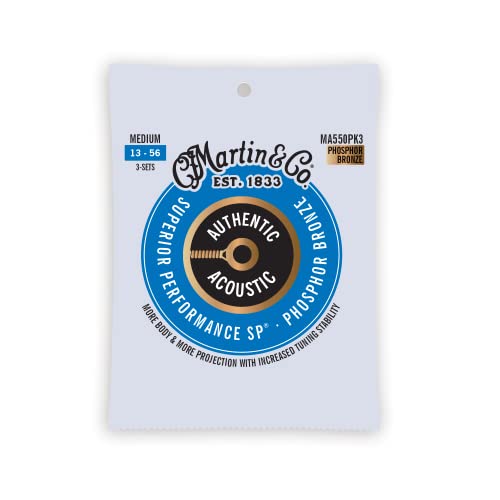
Gauge is the thickness of the strings in a set. Lighter values such as Extra Light and Light need less finger pressure and bend more easily, while Medium produces higher string tension at the same tuning.
- Number of strings
The string count must match the instrument, so a six-string set does not suit a seven-string guitar. Six-string sets and parts are the standard for guitars in standard tuning, and seven-string parts are made for instruments with an added low string.
- Material
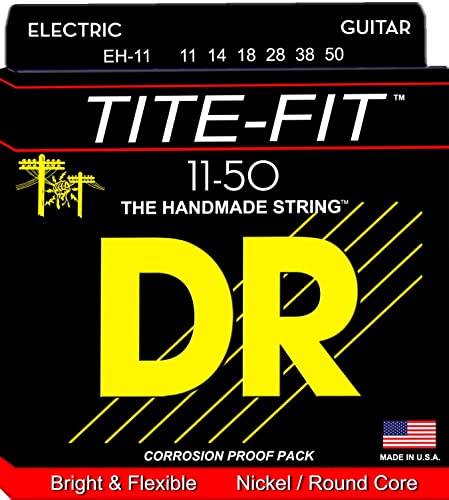
Material affects tone, feel and how a part wears. Nickel-plated steel is one of the string materials in this category, and the Floyd Rose tremolo blocks are brass. Brass is denser than steel, and many players associate that extra mass with sustain.
- Pickup configuration
The configuration describes the pickup layout on an instrument. An SS layout uses single-coil pickups, which give a brighter and more defined tone, while an HSH layout pairs two humbuckers with a single-coil in the middle position. Humbuckers give a fuller tone with less hum than single-coils.
- Connectivity
Connectivity names the jacks on a unit. A line-out sends a direct signal to a mixer, interface or recording setup, and TS 6.35 mm (tip-sleeve) is the standard unbalanced cable plug for guitar. Matching the plug to the cable avoids adapters in the signal path.
- Power requirement
Tuners run on battery, corded electric or a DC adapter, and the power source decides where a tuner can be used. Battery models work where there is no power point, while corded models suit a pedalboard that has a power supply. Where a DC 9V adapter is used, its barrel polarity should match the one stated for that model.
Top guitar accessories in the reference
A reference list of well-documented models, not a ranking.


Notable models
- Seymour Duncan Jeff Loomis Noumenon- Bridge. A pickup designated for the bridge position.
- Boss TU-10-BK Clip-On Chromatic Tuner. A chromatic tuner with a clip-on mount, from the Boss range.
- Donner Tuner. A tuner powered by DC 9V, with the adapter polarity specified for its barrel connector.
- Line 6 Catalyst 200 Cover. A cover made for the Line 6 Catalyst 200 amplifier.
- Korg ST1K Tuner for Analog & Modular Synthesizers. A tuner named for analog and modular synthesizers, one of the few models in the tuner group aimed at a non-guitar instrument.
Frequently asked questions
What does a clip-on tuner offer a guitarist that a pedalboard unit does not?
A clip-on tuner attaches to the headstock and reads the instrument's vibration, so it needs no cable and no pedalboard space. A pedalboard tuner suits a player who already runs effects on a board and wants the tuner placed in the signal chain.
How does a strobe tuner differ from a chromatic tuner?
A strobe tuner shows pitch through a moving light pattern that stays still when the note is in tune, which allows fine pitch checks. A chromatic tuner shows pitch on a needle or digital display and covers all twelve notes.
Which string gauge suits a guitarist who wants easier bending?
Extra Light and Light sets need less finger pressure and bend more easily. Medium sets produce higher string tension at the same tuning.
Does a guitarist need to check a tuner's power source before setting up a pedalboard?
Yes. Battery, corded electric and DC adapter models differ in where they can be placed, and a DC adapter must match the polarity stated for the model.
Which amplifier covers in this category are made for Line 6 Catalyst models?
The Line 6 Catalyst 60 Cover and the Line 6 Catalyst 200 Cover are each made for one Catalyst amplifier size.
Sources: manufacturer specifications and GuitarTrader catalog data. Last verified October 24, 2026.