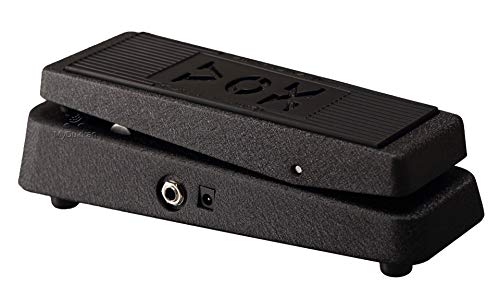
Dunlop Cry Baby® Classic Wah
Guitar wah pedal with a Fasel Inductor, a circuit retuned from the Standard Wah for a lower, more subtle sweep, and true bypass.
Price and availability as of Nov 24, 2026, 1:57 AM PST, subject to change. As an Amazon Associate, GuitarTrader earns from qualifying purchases made through this link, at no additional cost to you.
Notice a mistake? Let us know
Overview
The Cry Baby Classic Wah is a guitar wah pedal from Dunlop, model GCB95F. It uses a Fasel Inductor, the component the maker credits for the tone, voice and sweep of early Cry Baby pedals. The circuit is a retune of the Cry Baby Standard Wah, with a lower frequency center and a more subtle effect. Dunlop presents the pedal as a modern take on a classic sound, within a Cry Baby line the maker describes as the original since 1967. Its switching is true bypass, which the maker names as a feature for tonal purists.
Key features
- The circuit uses a Fasel Inductor, the component Dunlop credits for the vintage voice and sweep of early Cry Baby pedals.
- The Classic Wah is a retune of the Cry Baby Standard Wah circuit, set to a lower frequency center for a more subtle effect.
- Switching is true bypass, so the signal is routed around the wah circuit when the pedal is off.
- The pedal turns on or off when the toe is pushed down until a click is felt.
- Rocking the foot back and forth on the pedal changes the wah effect instantly.
- An INSTRUMENT jack takes the cable from the guitar, and an AMPLIFIER jack sends the signal on to the amp.
Specifications · verified against the manufacturer
- Color / finish
- Black
Product identifiers
- Brand
- Dunlop
- Model
- Cry Baby® Classic Wah
- Manufacturer model number
- GCB95F
- UPC (GTIN-12)
- 710137023048
- ASIN (Amazon)
- B0002GWVEU
- Category
- Filter, Wah & Envelope
- Manufacturer page
- jimdunlop.com
Dunlop Cry Baby® Classic Wah — where it fits
Guitar players who want the voice and sweep of early Cry Baby wahs in a more subtle form than the Standard Wah. The maker points to true bypass switching for tonal purists.
Vintage wah tone
The Fasel Inductor and the lower frequency center aim the sweep at the voice of early Cry Baby pedals. A player who wants that voice from a wah in the guitar rig can sweep the effect with the rocker on the pedal.
Guitar to amp connection
The pedal connects between the guitar and the amplifier with two instrument cables, one into the INSTRUMENT jack and one out of the AMPLIFIER jack. That placement matches a standard guitar-to-amp chain.
Pedalboard with a power supply
A pedalboard that uses a DC Brick, Iso-Brick or Mini Iso-Brick power supply can run the pedal from that supply instead of the 9-volt battery. Those supplies are not included with the pedal.
Switching in a rig
When the pedal is off, true bypass switching routes the signal around the circuit. That suits a player who keeps the wah in the chain for some songs and out of it for others.
Worth knowing
- The DC Brick, Iso-Brick and Mini Iso-Brick power supplies are not included with the pedal. A player who wants to run the pedal from one of those supplies needs to buy it separately. The pedal also runs on a 9-volt battery and on the Dunlop ECB003 adapter.
- The circuit is tuned to a lower frequency center and a more subtle effect than the Cry Baby Standard Wah. A player who expects the Standard Wah's sweep will hear a more subtle effect from this model.
- The 9-volt battery is accessed through the bottom of the pedal. Changing the battery means turning the pedal over.
- Manufacturer product page: jimdunlop.com (accessed November 9, 2026)
- GuitarTrader catalog data
- Manufacturer owner's manual or spec sheet
Setup and compatibility
Power is 9 volts DC, from a 9-volt battery accessed through the bottom of the pedal, a Dunlop ECB003 or ECB003E adapter, or a DC Brick, Iso-Brick or Mini Iso-Brick power supply. Current draw is 2.5 mA. Connect the guitar to the INSTRUMENT jack and the amplifier to the AMPLIFIER jack with instrument cables. Push the toe of the pedal down until it clicks to switch it on or off.
Frequently asked questions
Can the pedal run on a 9-volt battery?
Yes. The battery is accessed through the bottom of the pedal, and the manufacturer lists it as one of the power options.
What bypass type does the pedal use?
The pedal uses true bypass switching.
What are the input and output impedances of the pedal?
Input impedance is 1 MΩ and output impedance is 1 kΩ.
How much current does the pedal draw?
Current draw is 2.5 mA on a 9-volt DC supply.
Which cables connect the pedal between the guitar and the amp?
Two instrument cables are used: one from the guitar to the INSTRUMENT jack, and one from the AMPLIFIER jack to the amp.
More from Dunlop
All Dunlop gear →