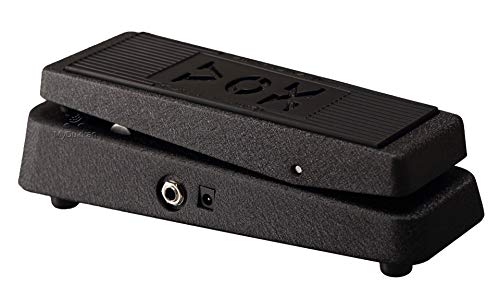
Dunlop Cry Baby® Daredevil™ Fuzz Wah
Cry Baby wah with a switchable custom fuzz circuit, internal fuzz output and gain controls, and true bypass.
Price and availability as of Nov 24, 2026, 2:02 AM PST, subject to change. As an Amazon Associate, GuitarTrader earns from qualifying purchases made through this link, at no additional cost to you.
Notice a mistake? Let us know
Overview
The Dunlop Cry Baby Daredevil Fuzz Wah combines a modified Cry Baby wah with a custom fuzz circuit in one pedal. An external WAH/FUZZ WAH switch toggles the fuzz on and off, and the wah works alone when the switch is in the WAH position. The maker describes the fuzz circuit as developed over several years by Johnny Wator, proprietor and builder of Daredevil Pedals, before it was brought to Dunlop. Two fuzz controls sit inside the pedal under the bottom plate: FUZZ OUTPUT sets the pedal's volume when fuzz is engaged, and GAIN sets the intensity of the fuzz. Each unit is hand built with through-hole components and true bypass switching.
Key features
- The pedal combines a modified Cry Baby wah with a custom fuzz circuit in a single enclosure.
- An external WAH/FUZZ WAH switch toggles the fuzz on and off, and the wah works on its own in the WAH position.
- The FUZZ OUTPUT and GAIN knobs are inside the pedal and are reached by removing the bottom plate.
- The bypass is true hardwire.
- The enclosure has a vintage crinkle-finish base and a polished aluminum rocker top with a custom tread.
Specifications · verified against the manufacturer
- Color / finish
- black
Product identifiers
- Brand
- Dunlop
- Model
- Cry Baby® Daredevil™ Fuzz Wah
- Manufacturer model number
- DD95FW
- UPC (GTIN-12)
- 710137131590
- ASIN (Amazon)
- B0C3MVDKK9
- Category
- Filter, Wah & Envelope
- Manufacturer page
- jimdunlop.com
Dunlop Cry Baby® Daredevil™ Fuzz Wah — where it fits
The maker describes the pedal as built for rock players seeking raw, aggressive tones from one unit that does both wah and fuzz.
Lead tones with fuzz engaged
The maker describes raising both the internal output and gain controls as a route to an instant lead tone with the fuzz engaged. Those controls are set inside the pedal.
Switching between wah and fuzz wah
The external switch moves between WAH and FUZZ WAH without a second pedal. Pushing the toe down until a click is felt switches the pedal on or off.
Wah sweeps
Rocking the pedal back and forth produces the vocal, expressive wah tones that the maker describes.
Pedalboard with a power supply
The pedal runs on a 9-volt battery under the pedal, a Dunlop ECB003 adapter, or a DC Brick, Iso-Brick or Mini Iso-Brick supply. It sits between the guitar and the amplifier, connected through the INSTRUMENT and AMPLIFIER jacks.
Worth knowing
- The fuzz output and gain controls are internal, reached by removing the bottom plate. Changing fuzz level or intensity means opening the pedal, so those settings are not changed with a knob during a song.
- The switch offers two modes, WAH and FUZZ WAH. When the fuzz is engaged it is always combined with the wah sweep.
- Manufacturer product page: jimdunlop.com (accessed October 31, 2026)
- GuitarTrader catalog data
- Manufacturer owner's manual or spec sheet
Setup and compatibility
Current draw is under 1 mA on a 9 VDC supply. The pedal sits between the guitar and the amplifier, connected through the INSTRUMENT and AMPLIFIER jacks.
Frequently asked questions
Can the pedal be used as a wah without the fuzz?
Yes. Set the WAH/FUZZ WAH switch to the WAH position to use the wah effect by itself.
How is the fuzz level set?
The FUZZ OUTPUT knob sets the pedal volume when fuzz is engaged, and the GAIN knob sets the fuzz intensity. Both are inside the pedal and are reached by removing the bottom plate.
Does the pedal use true bypass?
Yes. The bypass is true hardwire.
What power sources does the pedal accept?
It takes one 9-volt battery, which sits under the pedal, a Dunlop ECB003 9-volt adapter, or the DC Brick, Iso-Brick and Mini Iso-Brick power supplies.
How is the pedal connected?
A cable from the guitar runs to the INSTRUMENT jack, and a second cable runs from the AMPLIFIER jack to the amplifier.
How is the pedal switched on and off?
Push the toe of the pedal down until a click is felt to switch it on or off. Rocking the pedal back and forth then sweeps the wah.
More from Dunlop
All Dunlop gear →